

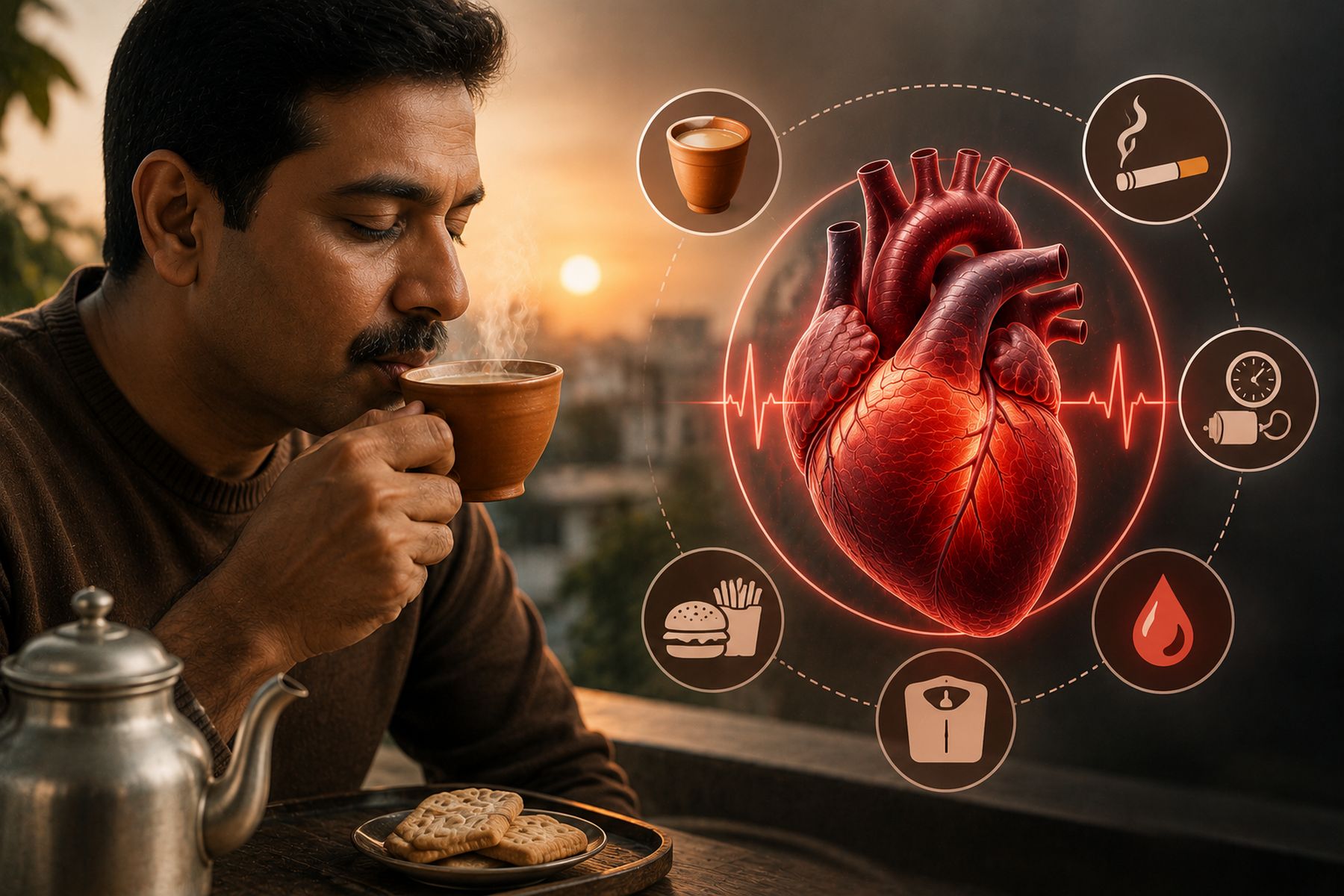
For millions of Indians, the day does not begin with an alarm.
It begins with chai.
Morning chai. Office chai. Rain chai. Guest chai. Stress chai. “Bas ek aur” chai.
It is comfort, habit, ritual, social glue, and emotional support in liquid form.
Which is why heart-health conversations around chai often become extreme.
One side says tea is dangerous.
The other says people have been drinking chai forever.
The truth sits somewhere in the middle.
Chai itself is not automatically the villain.
But the way many Indians consume it can quietly create cardiovascular concerns over time.
The Real Question Is Not “Is Chai Bad?”
The better question is:
What exactly is in your chai habit?
Because heart risk is rarely about one isolated cup.
It’s about the pattern surrounding it.
That pattern often includes:
- multiple sugary cups daily
- strong caffeine intake
- full-fat milk
- salty or fried snacks
- biscuits loaded with sugar
- late-evening caffeine disrupting sleep
The issue is rarely chai alone.
It’s chai culture.
Let’s Break the Habit Down
1. The Sugar Problem
This is usually the biggest issue.
A single Indian-style chai may contain 1–3 teaspoons of sugar.
Now multiply that by:
3 cups a day
4 cups a day
5 cups a day
That adds up quickly.
Excess sugar contributes to:
- weight gain
- insulin resistance
- diabetes risk
- metabolic syndrome
- increased cardiovascular burden
The scary part?
Because chai feels small, people don’t mentally count the sugar.
But the body does.
2. Caffeine and Blood Pressure
Tea contains caffeine.
Moderate caffeine is generally manageable for many healthy adults.
But excessive intake may contribute to:
- temporary BP spikes
- palpitations
- jitteriness
- sleep disruption
- increased stress response
This matters more for:
- hypertension patients
- anxious individuals
- those with irregular heart rhythms
- people consuming multiple strong cups daily
One moderate cup is different from six aggressive office chais.
3. The Chai Companion Problem
Chai rarely travels alone.
It brings friends.
Usually unhealthy ones.
Common pairings:
- namkeen
- biscuits
- rusk
- fried snacks
- bakery items
- pakoras
- sweets
Now the habit becomes more than beverage intake.
It becomes repeated sodium, sugar, and unhealthy fat exposure.
That is where heart risk grows.
4. Sleep Damage from Late Chai
Many people underestimate this.
Evening chai.
Late-night work chai.
Post-dinner chai.
Caffeine too late in the day can interfere with sleep quality.
Poor sleep contributes to:
- higher BP
- hormonal imbalance
- stress burden
- metabolic dysfunction
- long-term cardiovascular strain
This becomes even worse in already sleep-deprived urban lifestyles.
When Chai Is Probably Not the Main Problem
Let’s be fair.
If someone:
- drinks 1 moderate cup
- limits sugar
- maintains healthy lifestyle habits
- stays active
- sleeps well
- has no major medical restrictions
chai itself is unlikely to be the defining heart issue.
The problem emerges when chai becomes part of a broader unhealthy pattern.
Higher-Risk Groups Who Should Be More Careful
Extra caution matters for:
- hypertension patients
- diabetics
- obesity-risk individuals
- heart rhythm patients
- people with sleep disorders
- high-stress professionals
- individuals with high cholesterol
In these cases, consumption habits deserve review.
The Bigger Issue: Invisible Daily Habits
Heart disease often doesn’t come from dramatic bad decisions.
It grows from normalized routines.
Tiny repeated behaviors that never feel dangerous.
That’s why chai habits escape scrutiny.
No one thinks:
“This harmless daily ritual may be stacking risk.”
But repeated daily patterns are exactly how long-term health shifts happen.
Smarter Chai Habits (Without Breaking Up Completely)
No need for dramatic heartbreak.
Practical improvements:
- reduce sugar gradually
- avoid repeated cups throughout the day
- limit late-evening caffeine
- skip unhealthy snack pairings
- consider lighter preparation
- monitor BP if sensitive to caffeine
- choose hydration alongside tea
The goal is moderation, not exile.
Final Thoughts
Chai is not your enemy.
But unconscious habits can be.
The real risk is not one cup of tea.
It’s the daily pattern built around it.
Because heart health is shaped less by occasional indulgence and more by what becomes routine.
And in India, very few routines are more deeply rooted than chai.
Visit the Heartbeat Foundation website to learn more about the prevention and symptoms of heart disease.
Heartbeat Foundation Website: https://heartbeatfoundation.org.in/
LinkedIn: www.linkedin.com/company/hbtfoundation
Instagram: https://www.instagram.com/hbtfoundation
Facebook: https://www.facebook.com/hbtfoundation