

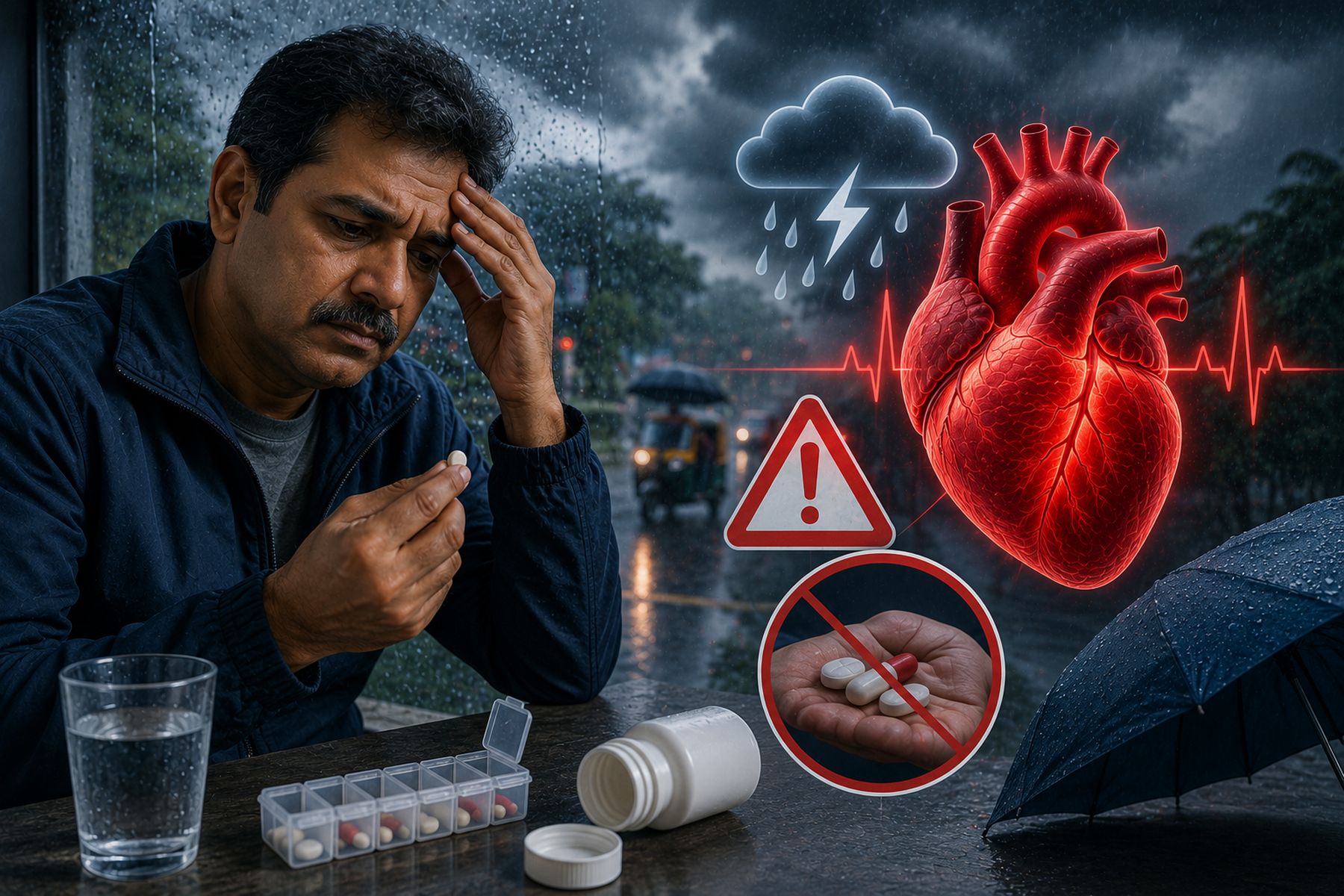
Monsoon changes routines.
Wake-up times shift. Travel plans get disrupted. People stay indoors more. Illness becomes common. Pharmacy visits get postponed. Family schedules become irregular.
For most people, these are temporary inconveniences.
For heart patients, they can create a dangerous pattern.
One missed medicine may not always trigger immediate consequences. That assumption is exactly what creates risk.
Because heart medications are not symptom-based comfort pills.
They are stability tools.
And when consistency breaks, the heart notices before the patient does.
Why Heart Medication Is Different
Many people approach medication emotionally.
If they feel okay, they assume things are okay.
That logic fails in heart care.
Heart medicines are often prescribed not because symptoms are dramatic, but because the underlying risk is real.
Examples include medicines that:
- control blood pressure
- prevent clot formation
- regulate heart rhythm
- manage cholesterol
- reduce fluid overload
- protect heart function after surgery or procedures
These medicines work by maintaining stability over time.
Skipping them interrupts that stability.
Why Monsoon Causes More Missed Doses Than People Realize
Monsoon creates disruption in subtle ways.
Travel Interruptions
Road trips, train delays, unexpected overnight stays, flooding, route changes.
People forget:
- medicine strips
- backup prescriptions
- exact timing
What begins as inconvenience becomes missed dosing.
Seasonal Illness
During fever, cough, weakness, or digestive upset:
patients often:
- skip medicines because they feel too weak
- avoid tablets due to nausea
- self-adjust dosage
- prioritize fever medicines instead
This creates medication inconsistency exactly when the body is already stressed.
Delayed Pharmacy Access
Heavy rain, flooding, traffic, or poor mobility often delay refills.
Families assume:
“We’ll get it tomorrow.”
Tomorrow becomes another missed dose.
Routine Breakdown
When routines change, medication discipline weakens.
Monsoon weekends, irregular work schedules, indoor inactivity, altered sleep patterns all increase forgetfulness.
What Actually Happens When Medication Is Missed?
The danger depends on the medicine type.
But the consequences can be serious.
Blood Pressure Medication
Missed BP medication can lead to:
- sudden BP spikes
- headaches
- dizziness
- chest strain
- increased stroke risk
This becomes more dangerous when weather changes already affect circulation.
Blood Thinners
This is particularly serious.
Patients post-angioplasty or with clotting risk depend on consistency.
Missing blood thinners may increase the chance of clot formation.
That is not a small risk.
Heart Rhythm Medicines
Skipped rhythm medication may trigger:
- palpitations
- irregular heartbeat
- dizziness
- worsening cardiac instability
Some rhythm conditions escalate faster than patients expect.
Heart Failure Medication
These medicines help regulate fluid balance and heart workload.
Skipping them can contribute to:
- swelling
- breathlessness
- fluid overload
- worsening fatigue
In severe cases, hospitalization may become necessary.
Cholesterol Medication
Patients often underestimate this category because effects are not immediately visible.
But cholesterol control is long-term vascular protection.
Repeated inconsistency weakens that protection.
The Dangerous Thought Pattern
The real problem is not forgetting once.
It’s the belief system behind it.
Common assumptions:
- “One dose won’t matter.”
- “I feel fine.”
- “I’ll restart tomorrow.”
- “I’m already taking so many medicines.”
- “This one is probably not urgent.”
That mindset creates repeated inconsistency.
Repeated inconsistency creates instability.
The Risk Gets Worse During Infection
This is where monsoon makes things more dangerous.
When the body is already fighting:
- fever
- respiratory infection
- dehydration
- inflammation
the heart is under extra stress.
Medication consistency becomes more important, not less.
Skipping medication during illness compounds risk from both sides.
High-Risk Patients Who Need Extra Discipline
The highest-risk groups include:
- post-angioplasty patients
- bypass surgery patients
- heart failure patients
- hypertension patients
- diabetics with cardiac history
- elderly cardiac patients
- arrhythmia patients
For these groups, medication discipline is critical.
How Families Can Prevent Medication Disruption
Practical steps:
Build Buffer Stock
Never wait until the final strip.
Maintain extra supply during monsoon months.
Use Medication Reminders
Phone alarms.
Family reminders.
Pill organizers.
Simple systems prevent accidental misses.
Travel Preparedness
Carry:
- extra doses
- written prescriptions
- medicine list
- emergency contact info
Never rely on destination access.
Don’t Self-Adjust During Illness
Always seek medical advice before stopping or changing medicines.
Medication non-compliance is not always about carelessness.
Sometimes it comes from:
- poor awareness
- confusion
- affordability concerns
- uncertainty during illness
The Heartbeat Foundation aims to help and reduce those gaps by focusing on continuity, awareness, and preventive action.
That means helping patients understand:
- why consistency matters
- when symptoms need escalation
- how avoidable instability develops
- why preventive discipline prevents emergencies
Because one of the most preventable cardiac risks is interruption.
Final Thoughts
Monsoon doesn’t create heart disease.
But it creates the kind of disruptions that can destabilize existing conditions.
The danger is rarely dramatic in the beginning.
It often starts with something simple:
one missed dose
one delayed refill
one casual assumption
And over time, those small breaks can create major consequences.
For heart patients, consistency is not routine.
It is protection.
Visit the Heartbeat Foundation website to learn more about the prevention and symptoms of heart disease.
Heartbeat Foundation Website: https://heartbeatfoundation.org.in/
LinkedIn: www.linkedin.com/company/hbtfoundation
Instagram: https://www.instagram.com/hbtfoundation
Facebook: https://www.facebook.com/hbtfoundation