

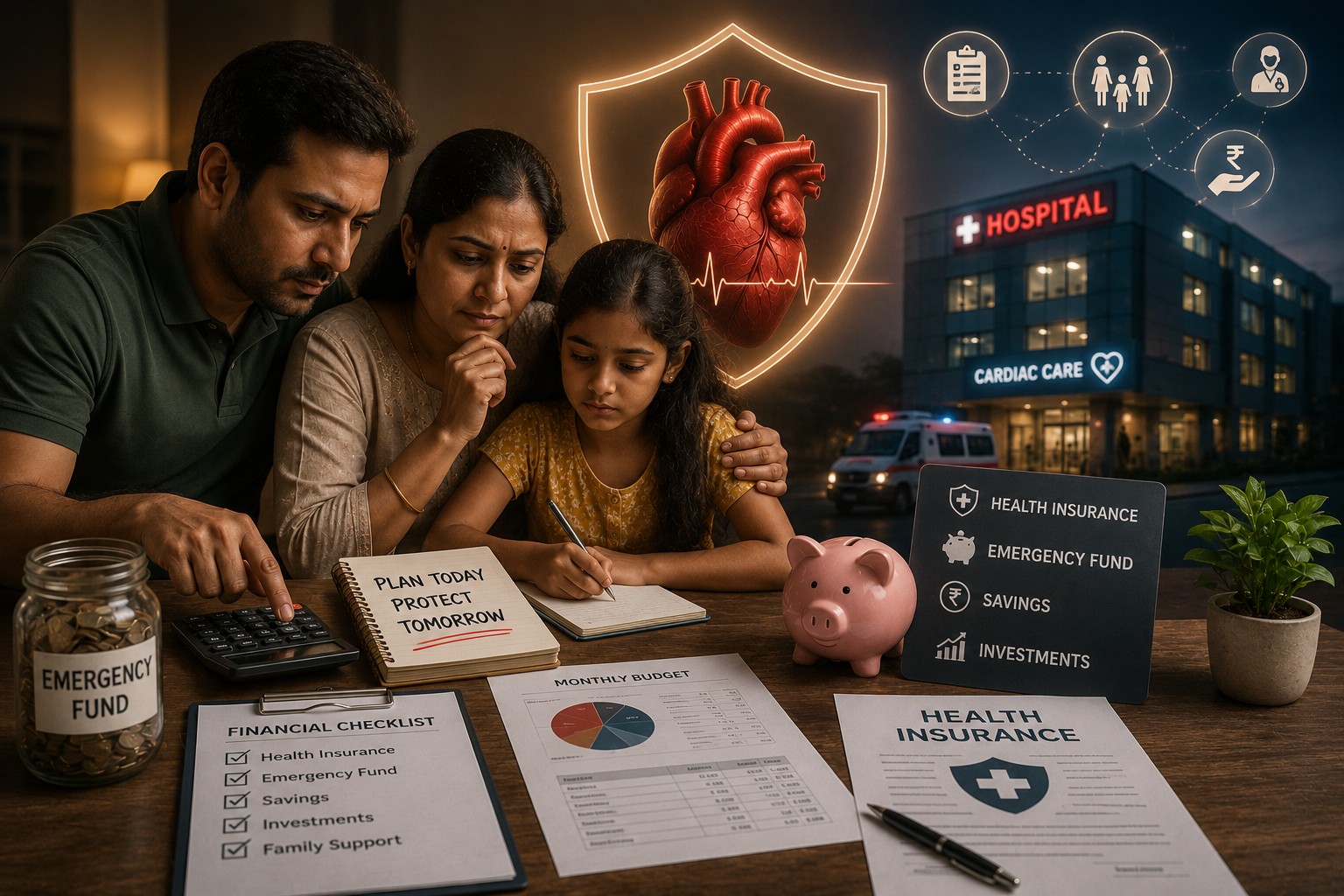
A heart emergency can change a family’s life in a matter of hours.
One moment, everything feels normal.
The next, there are hospital visits, specialist consultations, diagnostic tests, treatment decisions, and difficult financial conversations.
While most people understand the health risks associated with heart disease, far fewer prepare for the financial realities that often accompany it.
The challenge is not limited to major surgeries.
Even the journey leading up to treatment can involve significant expenses, including consultations, investigations, medicines, hospitalization, follow-up care, and lifestyle adjustments.
For many families, the financial burden becomes almost as overwhelming as the medical situation itself.
Preparing financially before a crisis occurs can reduce stress, support faster decision-making, and help families focus on recovery rather than uncertainty.
Why Heart Treatment Costs Can Escalate Quickly
Many people assume that heart-related expenses begin with surgery.
In reality, costs often start much earlier.
A typical cardiac journey may involve:
- Initial consultations
- Blood tests
- ECGs
- Echocardiograms
- Stress tests
- CT scans or angiography
- Hospital admissions
- Medicines
- Follow-up reviews
If a major procedure becomes necessary, costs can increase significantly.
This is why financial preparation should not focus solely on emergencies but on the entire treatment journey.
The Hidden Costs Families Often Overlook
When discussing healthcare expenses, most people think only about hospital bills.
However, several indirect costs can also affect households.
These may include:
Loss of Income
A patient may be unable to work during recovery.
Family members may also take time away from work to provide care.
Travel Expenses
Specialist cardiac care is not always available nearby.
Travel, accommodation, and transportation costs can add up quickly.
Long-Term Medication
Many cardiac patients require ongoing medication after treatment.
These recurring expenses often continue for years.
Lifestyle Adjustments
Dietary changes, rehabilitation programs, and follow-up testing can create additional financial commitments.
Planning for these expenses is just as important as planning for the procedure itself.
Start With an Emergency Medical Fund
One of the simplest ways to improve financial preparedness is to maintain a dedicated medical emergency fund.
This fund should ideally be:
- Separate from daily expenses
- Easily accessible
- Reserved for healthcare needs
Even a modest emergency fund can provide valuable flexibility during the early stages of a medical crisis.
Building the fund gradually is often more realistic than trying to accumulate a large amount immediately.
Understand Your Health Insurance Coverage
Health insurance can play a critical role in reducing financial stress.
However, many families do not fully understand their policies until they need to make a claim.
Important areas to review include:
- Coverage limits
- Waiting periods
- Network hospitals
- Procedure-specific conditions
- Claim processes
Knowing these details in advance allows families to make faster decisions when treatment becomes necessary.
Don’t Assume Youth Equals Financial Safety
A common misconception is that financial preparation for heart disease is only relevant later in life.
However, cardiovascular conditions are increasingly affecting younger adults in India.
Factors such as:
- Stress
- Sedentary lifestyles
- Diabetes
- High cholesterol
- Family history
have contributed to earlier onset of cardiac problems in many cases.
Financial planning should therefore be viewed as a family responsibility rather than an age-based concern.
Preventive Health Is Also Financial Planning
One of the most overlooked forms of financial preparation is preventive healthcare.
Routine screenings can help identify risk factors before they develop into more serious conditions.
Examples include:
- Blood pressure checks
- Cholesterol screening
- Blood sugar testing
- Cardiac risk assessments
While prevention cannot eliminate all risks, early detection often allows for less invasive and more affordable treatment options.
Delays, on the other hand, can increase both medical complexity and financial burden.
Have Important Documents Ready
Financial preparedness also involves organization.
Maintain easy access to:
- Insurance information
- Medical records
- Identification documents
- Policy numbers
- Emergency contacts
During urgent situations, families should not have to search through multiple files and folders for critical information.
Preparedness reduces confusion when time is limited.
Talk About Healthcare Before an Emergency Happens
Many families avoid conversations about health emergencies because they feel uncomfortable.
However, discussing these issues early can be extremely valuable.
Topics may include:
- Preferred hospitals
- Insurance coverage
- Emergency contacts
- Financial responsibilities
- Medical decision-making
Clear communication can prevent misunderstandings during stressful situations.
The Role of Community and Family Support
In India, healthcare decisions often involve the entire family.
Relatives, friends, and community networks frequently provide:
- Emotional support
- Logistical assistance
- Financial help
- Caregiving support
Strong support systems can make a significant difference during recovery.
However, relying entirely on external assistance should not replace personal financial preparedness.
Why Delaying Care Can Increase Costs
One of the most expensive decisions is often the decision to wait.
Some people postpone medical evaluation because of:
- Cost concerns
- Fear of diagnosis
- Busy schedules
- Assumption that symptoms will improve
Unfortunately, delayed care can sometimes lead to more complex and costly treatment later.
Early intervention often improves both medical and financial outcomes.
The Bigger Picture: Financial Preparedness Supports Better Health Decisions
When families feel financially prepared, they are often able to make decisions more confidently.
They can focus on:
- Treatment options
- Recovery plans
- Long-term health management
rather than immediate financial uncertainty.
Preparedness does not eliminate challenges, but it can reduce avoidable stress during critical moments.
Final Thoughts
No family can predict when a heart-related medical emergency might occur.
However, every family can take steps to become more prepared.
Building an emergency fund, understanding insurance coverage, maintaining organized records, prioritizing preventive care, and discussing healthcare plans in advance can all contribute to greater confidence during difficult situations.
Financial preparedness is not about expecting the worst.
It is about creating stability so that when health challenges arise, families can focus on what matters most: care, recovery, and well-being.
