

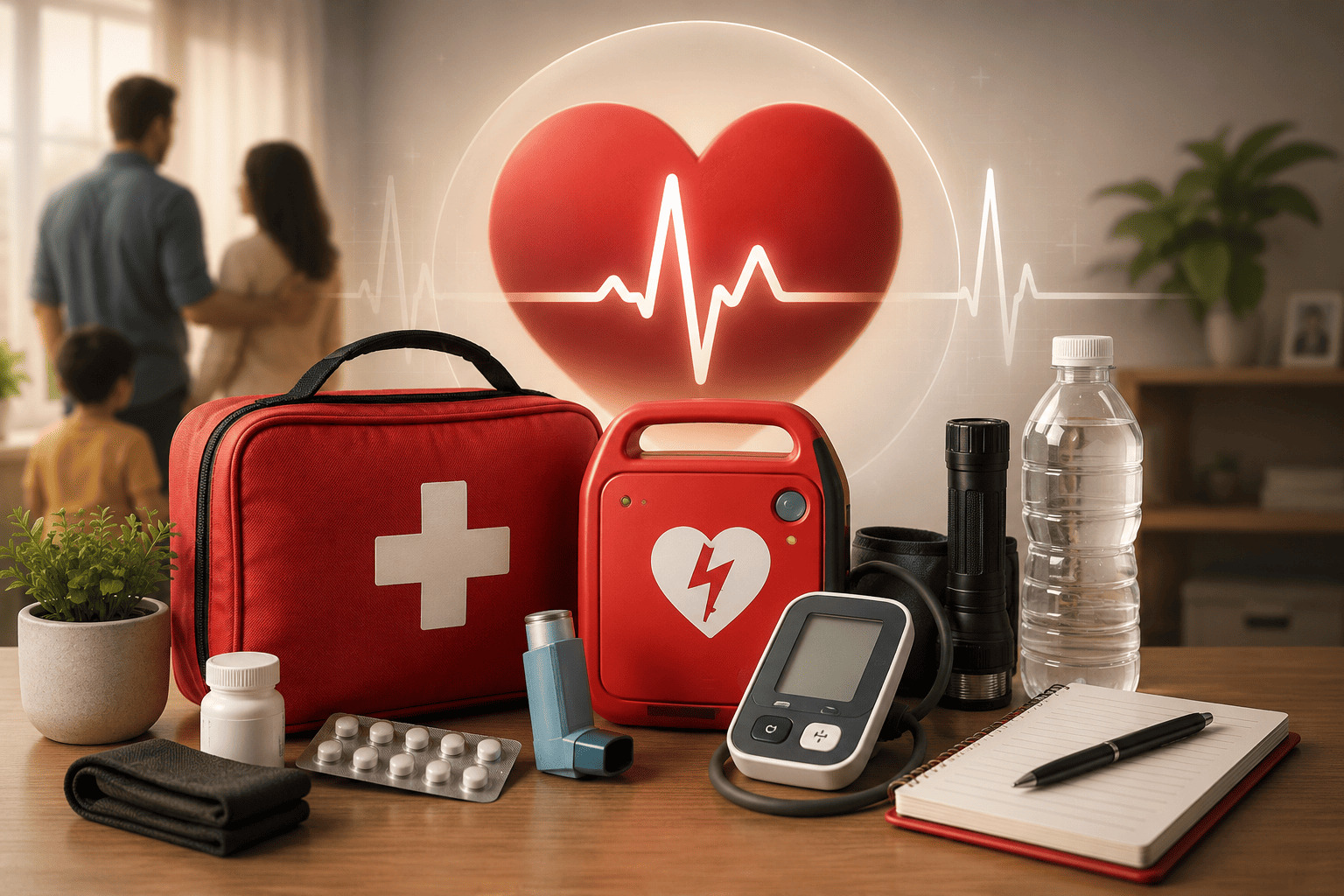
A cardiac emergency is one of the few situations where every minute matters.
Whether it is a heart attack, sudden chest pain, severe breathlessness, or a cardiac arrest, the first few minutes often determine how quickly treatment begins and how well the patient recovers.
Unfortunately, many families find themselves unprepared when an emergency strikes.
Medical records cannot be located. Medications are unknown. Important phone numbers are missing. Family members panic. Valuable time is lost.
The reality is that no family expects a cardiac emergency. But preparing for one can make a significant difference when every second counts.
Just as homes prepare for fires, natural disasters, or power outages, families should also have a basic cardiac emergency plan in place.
Why Preparation Matters
In many heart-related emergencies, the biggest challenge is not the hospital.
It is everything that happens before reaching the hospital.
Families often struggle with:
- Identifying symptoms
- Deciding whether to seek emergency care
- Finding medical documents
- Remembering medications
- Contacting doctors
- Arranging transportation
These delays can increase complications and affect outcomes.
Preparation reduces confusion and helps families act with greater confidence.
Essential Medical Information Every Family Should Maintain
One of the most useful things a family can do is create a simple medical information file.
This should include:
Basic Patient Information
- Full name
- Age
- Blood group
- Existing medical conditions
- Known allergies
This information helps healthcare providers make faster decisions during emergencies.
Current Medications
Maintain an updated list of:
- Medication names
- Dosages
- Frequency of use
- Prescribing doctor’s name
Many patients, especially elderly individuals, take multiple medications.
During an emergency, family members often struggle to recall exact details.
A written record eliminates guesswork.
Medical History
Include details such as:
- Previous heart attack
- Angioplasty
- Bypass surgery
- Pacemaker implantation
- Diabetes
- Hypertension
- Stroke history
This information provides valuable context to emergency physicians.
Keep Important Documents Easily Accessible
Many families store medical papers across multiple drawers, bags, and folders.
During emergencies, finding them becomes difficult.
Keep copies of:
- Recent test reports
- ECG reports
- Echocardiogram results
- Angiography reports
- Hospital discharge summaries
- Insurance documents
Both physical and digital copies are useful.
A scanned version stored securely on a phone or cloud service can be especially valuable.
Maintain an Emergency Contact List
Do not rely entirely on memory.
Keep a list containing:
Medical Contacts
- Cardiologist
- Family physician
- Nearest hospital
- Ambulance services
Family Contacts
- Immediate family members
- Caregivers
- Close relatives
Store the list in multiple locations so it remains accessible.
Know the Nearest Cardiac Care Facility
Many people know the nearest clinic but not necessarily the nearest hospital equipped to handle cardiac emergencies.
Before an emergency occurs:
- Identify nearby hospitals with emergency cardiac services
- Understand approximate travel times
- Keep hospital contact numbers handy
This simple step can save valuable time when urgent treatment is required.
Create a Medication Backup Plan
Heart patients should never run out of essential medicines unexpectedly.
Families should:
- Maintain a small backup stock
- Keep prescriptions updated
- Refill medicines before they are nearly finished
- Carry medications during travel
Medication interruptions can sometimes create avoidable complications.
Learn the Common Warning Signs
Every family should recognize basic cardiac warning signs.
These may include:
- Chest pain or pressure
- Pain spreading to the arm, neck, jaw, or back
- Severe breathlessness
- Sudden sweating
- Dizziness
- Unexplained nausea
- Loss of consciousness
Not every symptom indicates a heart attack.
However, delayed action can be dangerous.
When in doubt, seeking medical evaluation is often the safest approach.
Have a Family Action Plan
One overlooked aspect of emergency preparedness is assigning responsibilities.
During emergencies, confusion often arises because everyone is reacting simultaneously.
Families can discuss:
- Who calls emergency services
- Who gathers medical records
- Who accompanies the patient
- Who informs relatives
Simple planning can reduce panic and improve response time.
Special Considerations for Elderly Heart Patients
Older adults often require additional preparation.
Consider maintaining:
- Updated medication charts
- Doctor visit summaries
- Mobility assistance information
- Emergency caregiver contacts
Many elderly patients may not be able to communicate their medical history clearly during an emergency.
Prepared documentation becomes even more important.
Technology Can Help
Simple tools can improve readiness:
- Emergency contact features on smartphones
- Medication reminder apps
- Digital health record storage
- Smartwatch health monitoring features
Technology should not replace preparation, but it can support it.
The Biggest Mistake Families Make
Many families assume preparation is unnecessary because no emergency has happened before.
Unfortunately, cardiac emergencies are often unexpected.
Preparation does not mean expecting the worst.
It means being ready to respond effectively if something does happen.
The goal is not fear.
The goal is readiness.
Final Thoughts
Cardiac emergencies rarely arrive with advance notice.
When they happen, preparation can make a meaningful difference.
Keeping medical records organized, maintaining updated medication information, identifying emergency contacts, and understanding warning signs are simple steps that can improve response times and reduce confusion.
No family can prevent every emergency.
But every family can be better prepared for one.
And when every minute counts, preparation becomes one of the most valuable forms of protection.
