

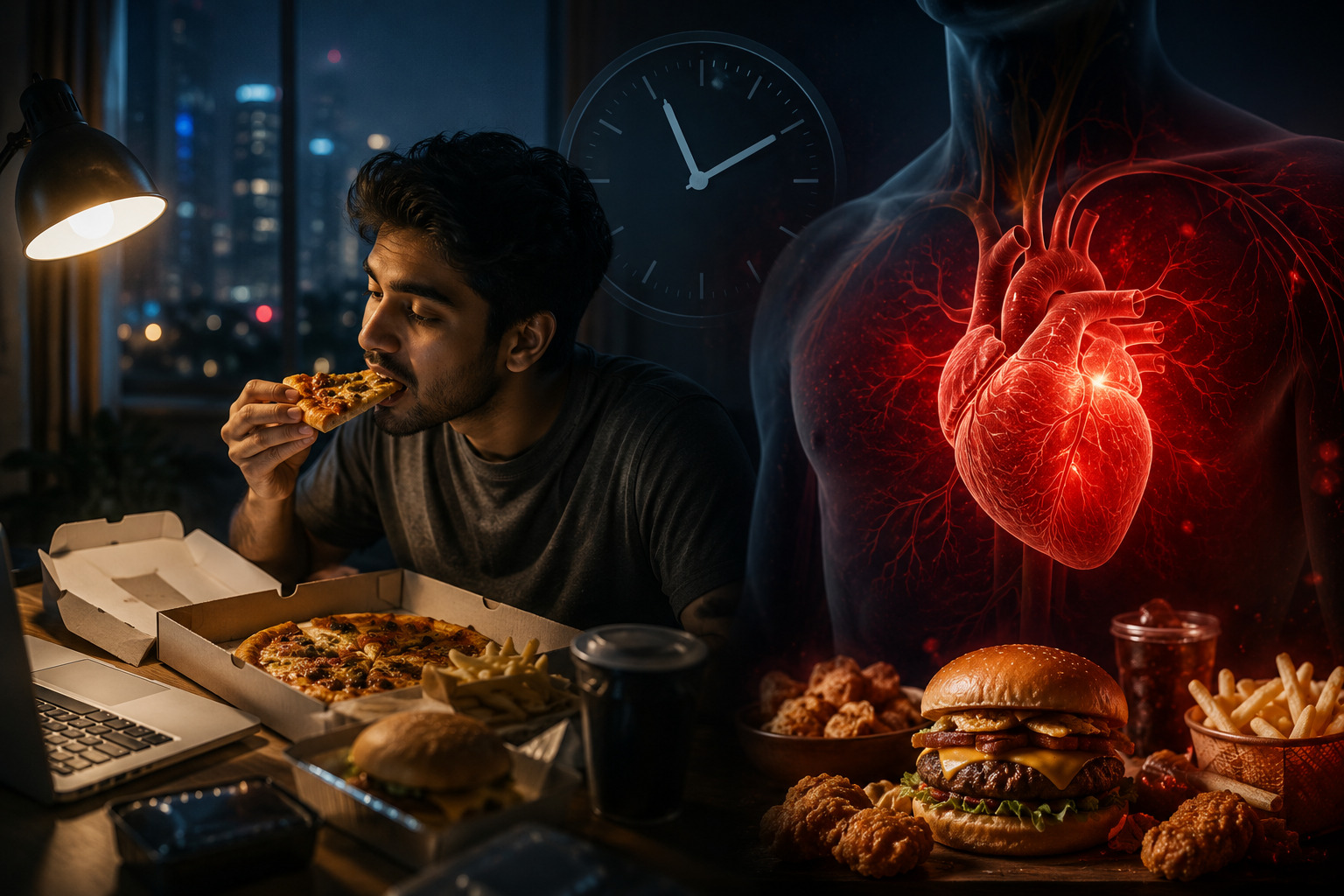
It’s 11:30 PM. You’re Hungry. The Delivery App Is Already Open.
It starts innocently enough.
A long day at work stretches into the night. You finish one last meeting, reply to a few emails, or finally settle down to watch your favorite show. Hunger kicks in, and within minutes you’re scrolling through a food delivery app.
Burgers, biryani, pizza, momos, desserts. Everything is available with just a few taps.
What was once an occasional indulgence has quietly become a routine for many people, especially in India’s cities.
Late-night food delivery has transformed the way we eat. Convenience has never been greater. But while it has changed our lifestyles, it may also be influencing something we don’t often think about: our heart health.
The concern isn’t about ordering food once in a while. It’s about the habits that can develop when late-night meals become a regular part of life.
More Than Just “Junk Food”
When people think about unhealthy eating, they often focus on what is on the plate.
But when we eat can also matter.
Late-night meals are often different from daytime meals.
They tend to be:
- Higher in calories
- Rich in salt and unhealthy fats
- Larger in portion size
- Accompanied by sugary drinks or desserts
At the same time, people are usually less active after eating late at night. Instead of burning energy, they often go straight to bed or continue sitting for long periods.
This combination can place additional strain on the body’s natural metabolic processes.
Why Do We Crave Unhealthy Foods at Night?
If you’ve ever found yourself craving pizza at midnight instead of a bowl of fruit, you’re not alone.
Several factors contribute to this pattern:
Stress
Long workdays can leave people mentally exhausted. Comfort food often feels rewarding after a difficult day.
Lack of Planning
Many people skip meals, eat irregularly, or work through dinner, only to become extremely hungry late at night.
Screen Time
Watching movies, gaming, or scrolling through social media often encourages mindless eating.
Easy Availability
Years ago, eating late meant cooking at home.
Today, hundreds of restaurants remain available well past midnight through food delivery platforms.
Convenience has reduced the barriers that once limited late-night eating.
What Does This Mean for Your Heart?
Heart disease develops over many years.
It is rarely caused by one meal.
However, habits repeated day after day can gradually increase risk.
Frequent late-night eating may contribute to several factors associated with cardiovascular disease, including:
- Weight gain
- Poor blood sugar control
- Higher cholesterol levels
- Elevated blood pressure
- Reduced sleep quality
These conditions often interact with one another, increasing overall cardiovascular risk over time.
Sleep and Heart Health Are Closely Connected
Eating shortly before going to bed may also interfere with sleep for some people.
Heavy meals can contribute to discomfort, acid reflux, or difficulty falling asleep.
Poor sleep itself has been associated with increased stress hormones, higher blood pressure, and changes in appetite-regulating hormones.
When late-night eating and inadequate sleep become regular habits, they can reinforce one another, creating a cycle that becomes difficult to break.
The Urban Lifestyle Connection
Late-night food delivery has become particularly common among:
- IT professionals
- Students
- Healthcare workers
- Entrepreneurs
- Night-shift employees
- Freelancers
Many people are not choosing these habits because they are careless.
Often, they are simply adapting to demanding schedules.
Work deadlines, long commutes, irregular shifts, and digital lifestyles make structured meal timings more difficult than ever.
Recognising these challenges is important because lasting change usually begins with practical solutions rather than guilt.
Small Changes Can Make a Big Difference
You don’t have to completely stop ordering food.
Instead, consider building healthier habits around convenience.
Some ideas include:
- Try to eat your main dinner earlier whenever possible.
- Keep healthy snacks at home to avoid ordering simply because you’re very hungry.
- Choose lighter meal options if ordering late at night.
- Avoid making late-night food delivery an everyday routine.
- Stay hydrated, as thirst can sometimes be mistaken for hunger.
- Maintain consistent sleep timings whenever possible.
Small adjustments practiced consistently are often more sustainable than drastic restrictions.
It’s Not About One Meal. It’s About the Pattern.
One late-night pizza will not determine your heart health.
Neither will one healthy salad.
Our long-term health is shaped by patterns that develop over months and years.
When convenience repeatedly replaces balanced eating, regular sleep, and mindful choices, the cumulative effects become more important than any single meal.
Recognising these patterns allows us to make gradual improvements before they begin affecting our health.
Final Thoughts
Food delivery has made life easier for millions of people across India.
Convenience itself is not the problem.
The real question is whether convenience is gradually replacing healthy routines.
Every late-night order may seem insignificant on its own, but repeated over months and years, these habits can quietly influence weight, sleep, metabolism, and heart health.
The goal is not perfection.
It is awareness.
Because sometimes the biggest changes in heart health don’t begin in an operating room.
They begin with the everyday choices we make before pressing the “Place Order” button.
