

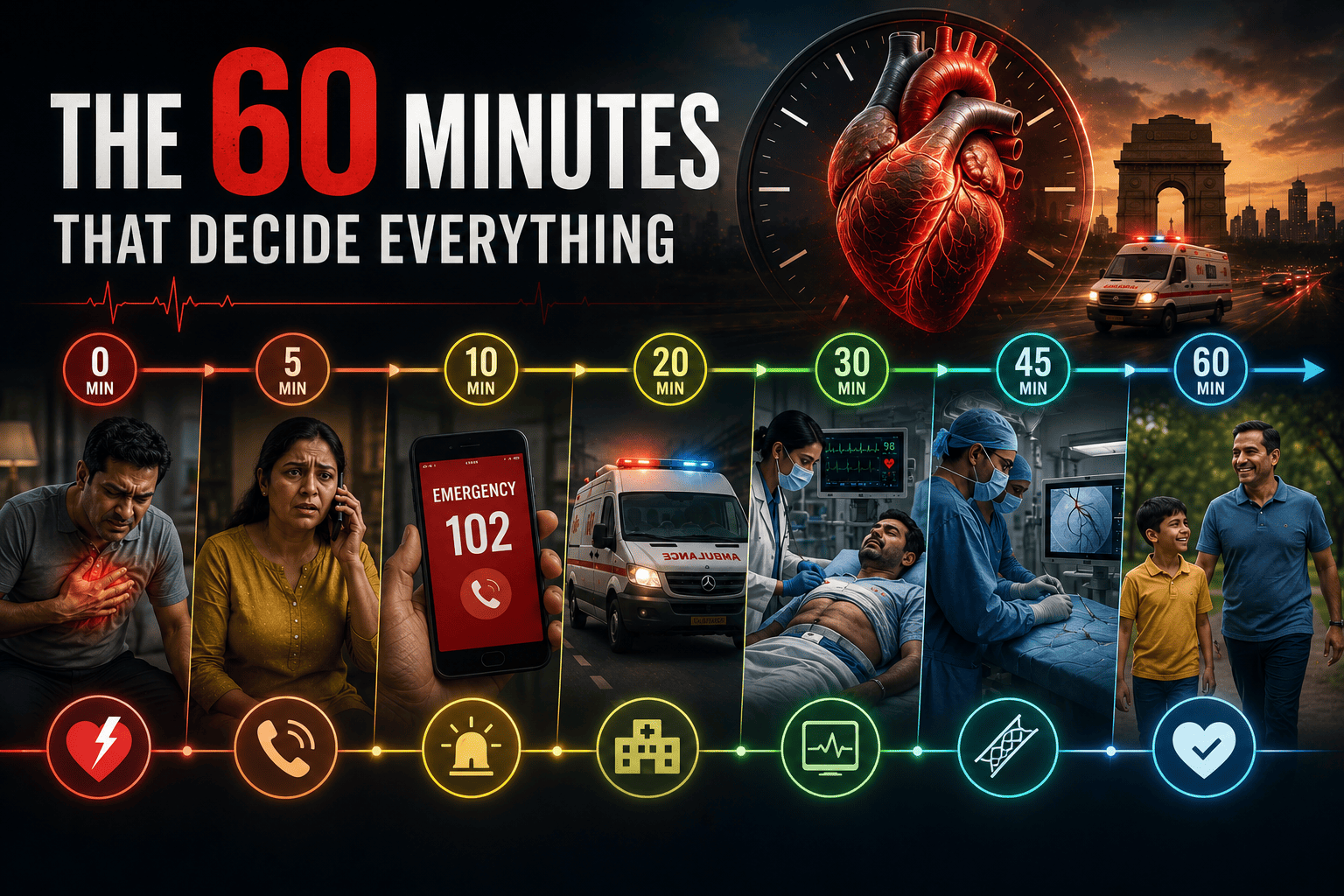
A heart attack doesn’t happen like a dramatic movie scene.
It usually begins quietly.
A slight heaviness in the chest.
A discomfort that feels like something you’ve felt before.
A moment you decide to ignore.
And that decision is where the clock starts ticking.
This is what the first 60 minutes of a heart attack actually look like in India.
Minute 0–10: Doubt
The first symptom appears.
It might not even feel serious. Many people describe it as:
- Mild chest pressure
- Uneasiness after a meal
- Slight breathlessness
In Indian households, this phase is where the biggest mistake happens — self-interpretation.
The mind looks for the most harmless explanation:
- Acidity
- Gas
- Fatigue
No action is taken.
Minute 10–25: Rationalization
The discomfort doesn’t go away. It starts to spread or intensify.
Instead of escalating, most people:
- Sit down and wait
- Drink water
- Take an antacid
- Lie down hoping it will pass
This is the stage where time is lost quietly.
No panic. No urgency. Just delay.
Minute 25–40: Escalation
The body becomes clearer. The symptoms become harder to ignore.
- Pain may move to the arm or jaw
- Sweating begins
- Breathing feels heavier
- Anxiety increases
Now the situation feels serious.
But instead of immediate medical action, another delay often occurs:
- Calling a family member first
- Asking for advice
- Waiting for someone to come home
In many Indian cases, this is where the golden hour is already slipping away.
Minute 40–60: Critical Window
At this point, the heart muscle is being deprived of oxygen.
Damage is actively happening.
If medical help is reached within this window, outcomes can change dramatically:
- Less heart damage
- Higher survival rates
- Faster recovery
If not, the situation quickly escalates into:
- Severe cardiac damage
- Need for major surgery
- Higher risk of death
The Real Problem Isn’t the Heart Attack — It’s the Delay
In India, most heart attack deaths are not because treatment doesn’t exist.
They happen because:
- Symptoms are misread
- Action is delayed
- Decisions are postponed
The system fails before the hospital is even reached.
What Should Actually Happen Instead
The moment chest discomfort feels unusual or unfamiliar:
- Treat it as a potential cardiac emergency
- Seek medical help immediately
- Prioritize speed over certainty
- Avoid self-diagnosis
It is better to be wrong in a hospital than right at home too late.
Where The Heartbeat Foundation Fits In
The Heartbeat Foundation doesn’t just focus on treatment — it focuses on reducing these exact delays.
Because if action happens early, everything else becomes easier.
The primary focus stays on:
- Affordable care access so financial hesitation doesn’t slow decisions
The goal is simple:
Reduce the time between symptom and action and provide affordable care and treatment.
Final Thought
A heart attack is not just a medical event.
It is a race against hesitation.
Most people don’t lose because help wasn’t available.
They lose because they waited.
And in those 60 minutes, waiting is the most dangerous choice you can make.
Visit the Heartbeat Foundation website to learn more about the prevention and symptoms of heart disease.
Heartbeat Foundation Website: https://heartbeatfoundation.org.in/
LinkedIn: www.linkedin.com/company/hbtfoundation
Instagram: https://www.instagram.com/hbtfoundation
Facebook: https://www.facebook.com/hbtfoundation