
In many Indian households, snoring is treated as comedy.
It becomes a family joke. A sleeping quirk. Something partners complain about and everyone eventually ignores.
But persistent, loud snoring is not always harmless.
In some cases, it may be the body’s warning sign that something deeper is happening.
Not just poor sleep.
Not just fatigue.
But increased cardiovascular stress.
The connection between snoring and heart health is stronger than most people realize, and because the signs show up at night, the risk often goes unnoticed for years.
Snoring Is Not Always “Just Snoring”
Occasional snoring can happen to anyone.
It may be triggered by:
- nasal congestion
- allergies
- sleeping position
- temporary fatigue
- alcohol consumption
That is not necessarily concerning.
The problem begins when snoring becomes:
- loud
- frequent
- persistent
- disruptive
- associated with breathing pauses
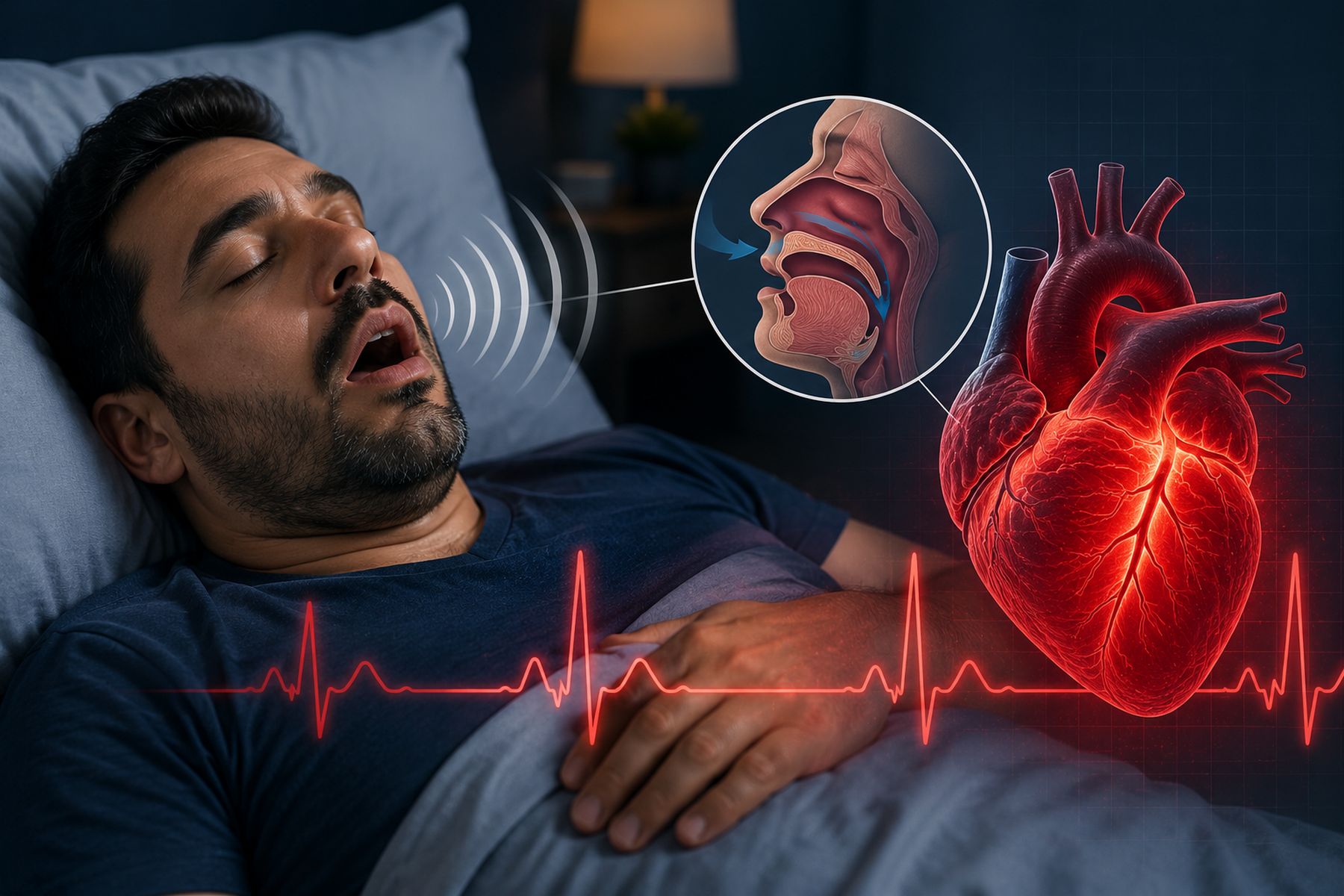
At that point, snoring may indicate obstructive sleep apnea (OSA), a condition where breathing repeatedly stops and starts during sleep.
And this is where the heart enters the conversation.
What Actually Happens During Sleep Apnea?
In obstructive sleep apnea:
the airway partially or fully collapses during sleep.
This causes:
- interrupted breathing
- reduced oxygen levels
- repeated micro-awakenings
- poor sleep quality
The body reacts as if it is under repeated stress.
Each breathing interruption triggers:
- oxygen deprivation
- stress hormone release
- sudden BP spikes
- heart rate fluctuations
Now imagine this happening dozens—or even hundreds—of times in one night.
Night after night.
Month after month.
Year after year.
That is not a sleep issue anymore.
That is cardiovascular stress.
How This Impacts the Heart
1. High Blood Pressure
One of the strongest links between sleep apnea and heart health is hypertension.
Repeated nighttime oxygen drops activate the body’s stress response.
This causes blood vessels to tighten and blood pressure to rise.
Over time, chronic uncontrolled hypertension increases risk for:
- heart attack
- stroke
- kidney damage
- heart failure
2. Irregular Heart Rhythms
Interrupted breathing affects cardiac electrical stability.
This may increase the risk of rhythm disturbances such as:
- palpitations
- atrial fibrillation
- irregular heartbeat episodes
These conditions may begin subtly and worsen over time.
3. Increased Heart Workload
When oxygen levels repeatedly fall, the heart must compensate.
This means more effort.
More strain.
Less recovery.
The heart loses the restful reset sleep is supposed to provide.
4. Higher Risk of Heart Attack and Stroke
Poor sleep quality combined with:
- oxygen instability
- BP spikes
- inflammation
- metabolic stress
creates a risk environment strongly associated with major cardiovascular events.
Why This Is Especially Relevant in India
Sleep apnea often goes undiagnosed in India.
Why?
Because snoring is normalized.
Common responses include:
- “everyone snores”
- “it’s just because of tiredness”
- “it happens with age”
- “he sleeps heavily, that’s all”
This delays recognition.
Additional Indian risk factors include:
- increasing obesity
- sedentary lifestyle
- diabetes prevalence
- hypertension burden
- late-night work culture
- high stress
Together, these make sleep-related cardiac risk highly relevant.
Signs That Snoring May Be a Medical Issue
Snoring deserves attention if it comes with:
- choking during sleep
- gasping for air
- daytime fatigue
- morning headaches
- poor concentration
- irritability
- unexplained high BP
- excessive daytime sleepiness
Partners often notice the symptoms before the patient does.
Who Is at Higher Risk?
Risk increases in people with:
- obesity
- hypertension
- diabetes
- thick neck circumference
- smoking habits
- family history
- sedentary lifestyle
- middle age and above
But lean individuals are not automatically safe.
Sleep apnea can occur outside obvious obesity patterns too.
The Hidden Problem: Poor Sleep Is Often Misdiagnosed as Lifestyle Fatigue
This is where many people lose years.
They assume:
- work stress
- aging
- burnout
- poor routine
while the actual issue remains untreated.
And because sleep problems rarely feel urgent, evaluation gets postponed indefinitely.
Meanwhile, cardiovascular stress continues silently.
Where The Heartbeat Foundation Helps
Many heart risks begin long before obvious symptoms appear.
The Heartbeat Foundation plans to focus on helping people recognize those quieter warning signs.
That includes shifting awareness from “only obvious chest pain matters” toward understanding hidden contributors like:
- poor sleep
- hypertension
- metabolic risk
- delayed diagnosis
Because prevention becomes far more effective when early signals are recognized instead of normalized.
A loud snore may seem harmless.
But sometimes it is the first clue.
What You Should Do If This Sounds Familiar
If snoring is frequent and associated with symptoms:
- do not dismiss it casually
- monitor BP regularly
- seek medical evaluation
- assess for sleep apnea if recommended
- pay attention to daytime fatigue patterns
- take persistent sleep disruption seriously
The goal is not to panic.
It is awareness.
Final Thoughts
Not every snorer has heart disease.
But persistent loud snoring should not be automatically ignored.
Sometimes the body sends warnings in unusual ways.
And sometimes the most dangerous risks are the ones disguised as routine habits.
Because if your sleep is repeatedly struggling for oxygen, your heart may be struggling too.
Visit the Heartbeat Foundation website to learn more about the prevention and symptoms of heart disease.
Visit the Heartbeat Foundation website to learn more about the prevention and symptoms of heart disease.
Heartbeat Foundation Website: https://heartbeatfoundation.org.in/
LinkedIn: www.linkedin.com/company/hbtfoundation
Instagram: https://www.instagram.com/hbtfoundation
Facebook: https://www.facebook.com/hbtfoundation