

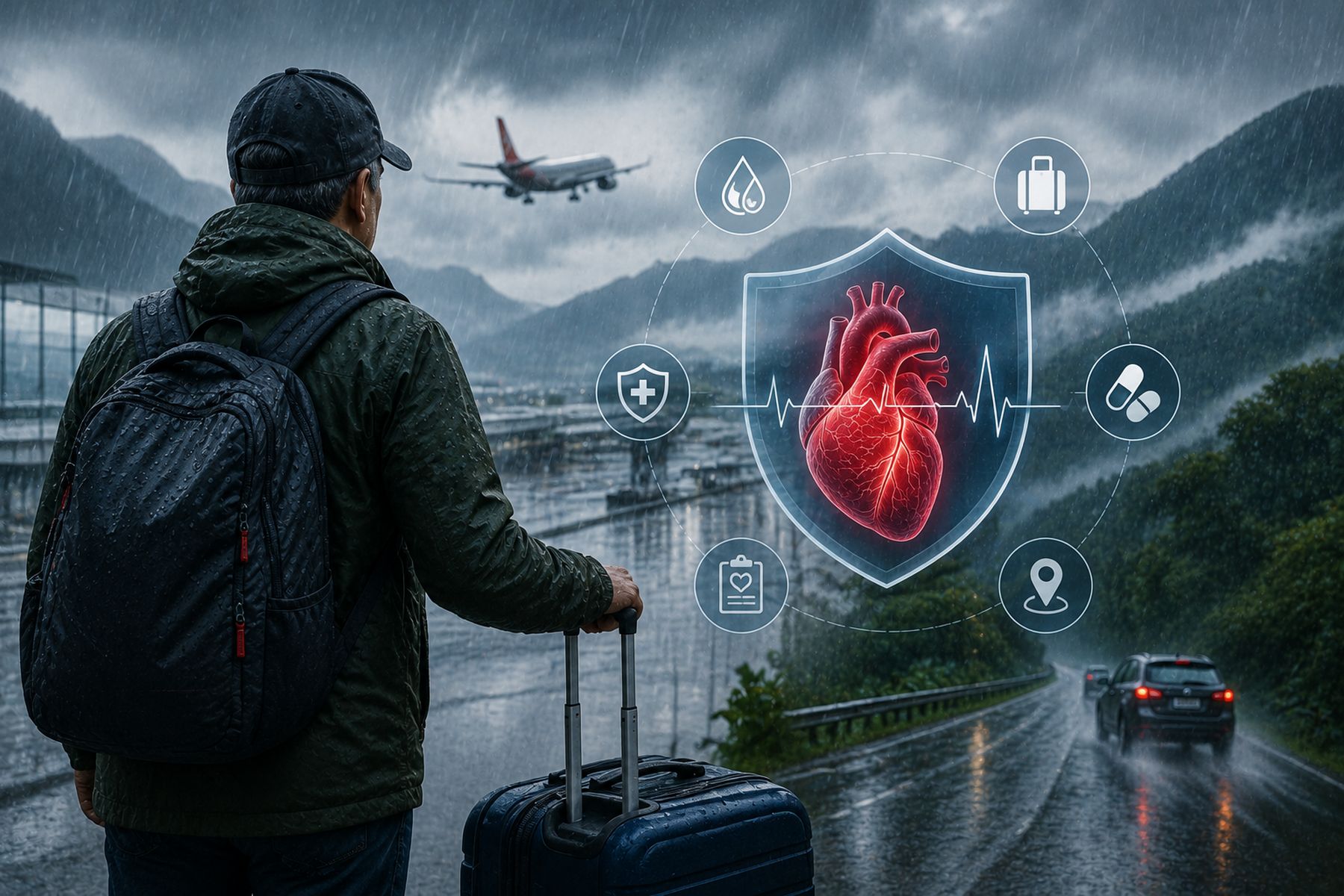
Monsoon travel in India has its own charm.
Weekend road trips. Family visits. Religious journeys. Long drives through green highways. Train travel during cooler weather.
But for individuals living with heart disease, high blood pressure, previous angioplasty, heart failure, or post-surgical recovery, travel during monsoon comes with risks that are easy to underestimate.
The issue is not travel itself.
The issue is what happens when weather disruptions, delayed access to care, physical strain, missed medication, or sudden illness intersect with an already vulnerable heart.
With the right planning, travel can still be safe.
Without preparation, a manageable condition can become an emergency far from home.
Why Monsoon Travel Is Different for Heart Patients
Travel already changes routine.
Monsoon adds unpredictability.
That combination matters.
Common monsoon disruptions include:
- traffic delays
- flooded roads
- train delays
- reduced access to nearby hospitals
- poor mobile connectivity in some routes
- fatigue from long waiting periods
- difficulty maintaining food and medication schedules
For healthy travelers, these may be inconvenient.
For heart patients, they can be medically significant.
1. Missed Medication Is One of the Biggest Risks
This is far more common than families realize.
Travel disrupts timing.
People forget:
- morning doses
- afternoon medication
- emergency backup medicines
Sometimes medicines get packed in checked luggage, inaccessible bags, or forgotten entirely.
For cardiac patients, skipped doses involving:
- blood pressure medication
- blood thinners
- cholesterol medication
- rhythm control medication
- heart failure medication
can destabilize health quickly.
Medication consistency is not optional during travel.
2. Physical Exertion Adds Unexpected Strain
Travel often includes more physical effort than expected:
- climbing station stairs
- walking long airport terminals
- carrying luggage
- navigating wet roads
- waiting in queues
- moving quickly between platforms or transport points
In humid monsoon weather, this strain increases further.
A heart patient who feels stable at home may become symptomatic under physical stress.
Warning signs include:
- unusual breathlessness
- chest heaviness
- sweating
- dizziness
- palpitations
Ignoring these symptoms while continuing travel is risky.
3. Delayed Access to Medical Help Can Be Dangerous
This is where monsoon changes the equation.
If symptoms develop during travel:
- road closures may delay transport
- traffic congestion may slow emergency access
- nearby cardiac care may be unavailable
- unfamiliar locations create decision paralysis
This becomes particularly dangerous for:
- senior citizens
- post-surgical cardiac patients
- individuals with recent procedures
- unstable BP patients
Planning for emergencies matters more than hoping they won’t happen.
4. Food Choices During Travel Can Trigger Problems
Travel eating habits often shift dramatically.
Common issues include:
- salty packaged snacks
- oily roadside food
- irregular meal timings
- overeating after long delays
- excess tea or coffee
- dehydration from poor fluid intake
For heart patients, these can contribute to:
- BP spikes
- fluid imbalance
- digestive discomfort mistaken for cardiac symptoms
- worsened heart strain
Monsoon street food also carries infection risk.
And infection itself can affect heart stability.
5. Humidity and Fatigue Can Quietly Build Stress
Monsoon weather feels cooler, but humidity can still be exhausting.
Humidity makes temperature regulation harder.
That means:
- more fatigue
- heavier breathing
- faster heart workload
- reduced comfort during movement
Add long travel hours, poor sleep, and inconsistent hydration, and the body becomes increasingly stressed.
6. Long Sitting Is Its Own Problem
Extended sitting during:
- car journeys
- bus travel
- train travel
- airport waiting
reduces circulation.
For some individuals, especially older travelers or those with vascular risks, prolonged inactivity can contribute to:
- swelling
- discomfort
- circulation issues
- increased cardiovascular strain
Movement breaks matter.
Essential Travel Checklist for Heart Patients
Before travel, ensure:
Medication Readiness
Carry:
- full prescribed medicines
- extra backup doses
- written prescription
- medication schedule list
Keep medicines in hand luggage, not inaccessible bags.
Medical Information Access
Carry:
- diagnosis summary
- doctor contact information
- emergency contacts
- previous procedure details if relevant
In emergencies, quick information saves time.
Destination Awareness
Know:
- nearest hospital
- cardiac care availability
- pharmacy access
- emergency transport options
Especially important in hill stations, pilgrimage routes, and remote areas.
Who Should Reconsider Non-Essential Travel?
Travel may need medical review if the patient has:
- recent angioplasty
- recent bypass surgery
- unstable BP
- active chest symptoms
- uncontrolled diabetes with heart disease
- severe breathlessness
- advanced heart failure
In these cases, medical advice before travel is essential.
Travel-related heart emergencies often become dangerous because families are unprepared, not because help is impossible.
Final Thoughts
Traveling during monsoon with a heart condition does not automatically mean staying home.
It means traveling smarter.
The biggest risks are rarely dramatic from the start.
They begin with:
- missed medication
- ignored fatigue
- poor hydration
- delayed action
Preparation changes outcomes.
Because the safest journeys are the ones planned with the heart in mind.
Visit the Heartbeat Foundation website to learn more about the prevention and symptoms of heart disease.
Heartbeat Foundation Website: https://heartbeatfoundation.org.in/
LinkedIn: www.linkedin.com/company/hbtfoundation
Instagram: https://www.instagram.com/hbtfoundation
Facebook: https://www.facebook.com/hbtfoundation
