
Sometimes, your heart doesn’t warn you loudly.
No severe pain. No dramatic collapse.
Just quiet changes — a flutter here, a pause there — as if it’s whispering:
“Please notice me. Something isn’t right.”
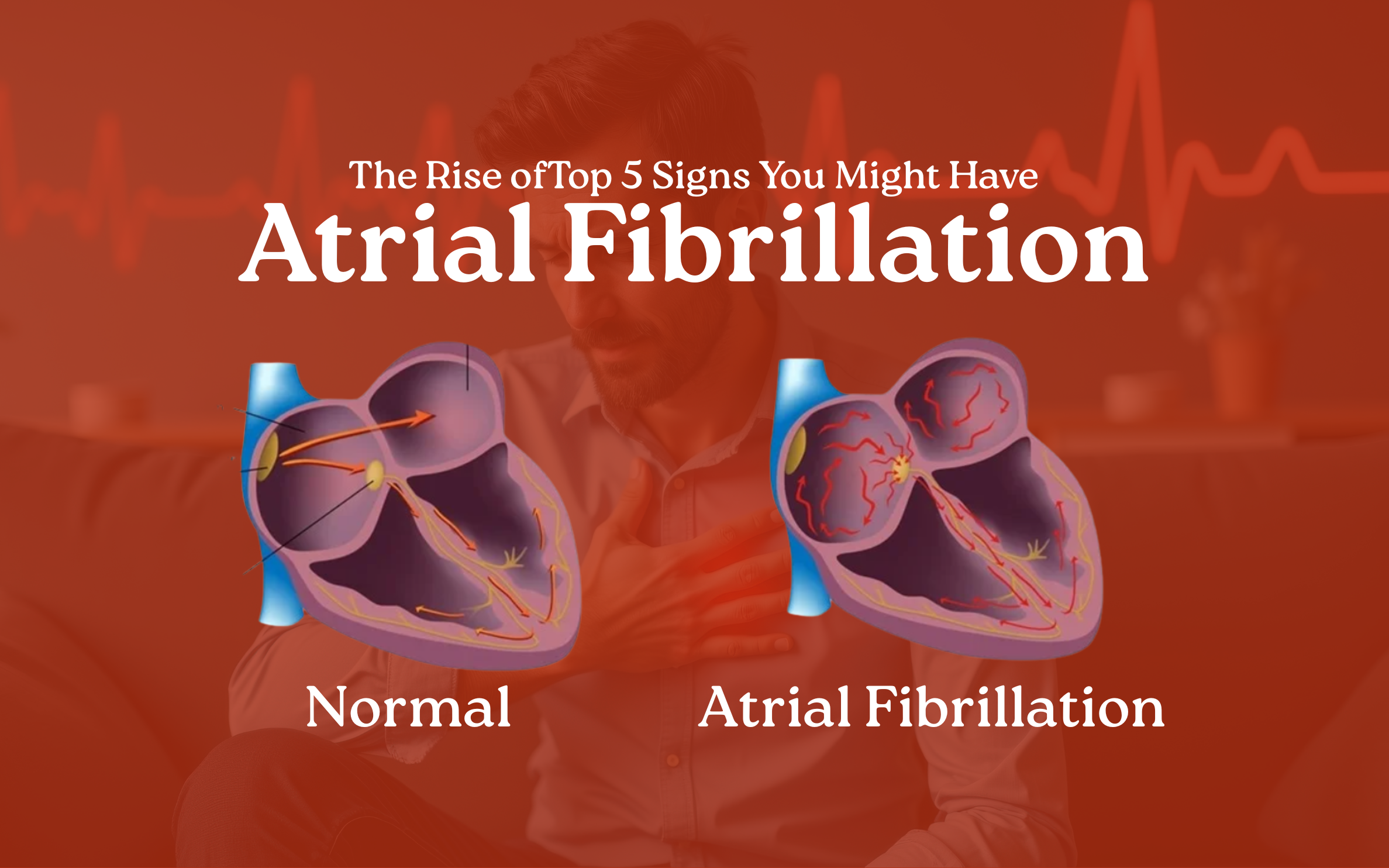
Atrial Fibrillation (AFib) is one of the most common heart rhythm disorders, yet also one of the easiest to ignore because it often shows up silently or unpredictably.
Your heart’s electrical signals get mixed up, and suddenly, the beat isn’t steady anymore — it’s fast, irregular, or uneven.
Let’s look at the 5 signs your heart may be giving you, gently but clearly.
1️⃣ A Sudden Flutter You Can’t Explain
Not excitement.
Not anxiety.
Just a random “flip-flop” or butterfly beat inside your chest. It may last seconds or minutes, then disappear — but return again days later.
“Kabhi kabhi dil seedha nahi dhadakta, aur yahi sanket hota hai.”
A flutter isn’t always harmless.
When it becomes frequent, it could be AFib quietly beginning.
2️⃣ Heartbeat That Speeds Up When You’re Completely Still
If your heart suddenly races:
- while sitting
- watching TV
- lying in bed
…it may not be stress — especially if your mind is calm and your body is resting. That unexplained rapid rhythm can be a classic AFib indicator.
3️⃣ Unusual Fatigue… Even When You Haven’t Done Much
This one often gets ignored.
If climbing simple stairs, walking to the gate, or even talking leaves you tired or breathless, it may be more than just “busy lifestyle” exhaustion.
Because when your heart rhythm is irregular, the body does not receive enough oxygen-rich blood — causing unexpected fatigue.
“Thakan bina wajah ho, toh dil awaaz deta hai.”
4️⃣ Shortness of Breath or Tightness in the Chest
It doesn’t have to feel dramatic.
It might be:
- Light breathlessness while resting
- Mild chest heaviness
- A feeling like you can’t take a full breath
When AFib disrupts normal pumping, the lungs feel the pressure too — making breathing feel off balance.
This symptom becomes more noticeable:
- At night
- After meals
- When bending forward
5️⃣ Irregular Pulse When You Check Your Wrist
This is one of the most telling signs.
If your pulse feels:
- too fast
- too slow
- skipping in between
- uneven, like “beat–beat–pause–beat”
…it could mean your electrical rhythm is misfiring. You don’t need medical tools — even a smartwatch or fingertip pulse check can alert you.
When Should You Worry?
If these episodes:
- keep returning
- become more frequent
- or start affecting daily activities
…it’s time to speak to a heart specialist. AFib isn’t just about irregular rhythm — it increases the risk of stroke if untreated.
Early diagnosis and treatment can prevent complications.
How Doctors Confirm AFib
Your cardiologist may use:
- ECG
- Holter monitor (24–72 hours)
- Wearable / patch ECG
- Electrophysiology study (if needed)
The good news?
AFib is now highly treatable — with medications, catheter procedures, and advanced rhythm therapies.
Final Thought
Your heart rarely shouts when something is wrong — it whispers.
Small irregularities are its early language:
- flutter
- skipped beat
- breathless moment
- unexplained fatigue
Don’t ignore its message.
Your heart is not trying to scare you — it’s trying to protect you.
“Dil ke signal hamesha sunai dete nahi, par mehsoos hote hain.”
Listening early can prevent major problems later — and give every heartbeat the care it deserves.