

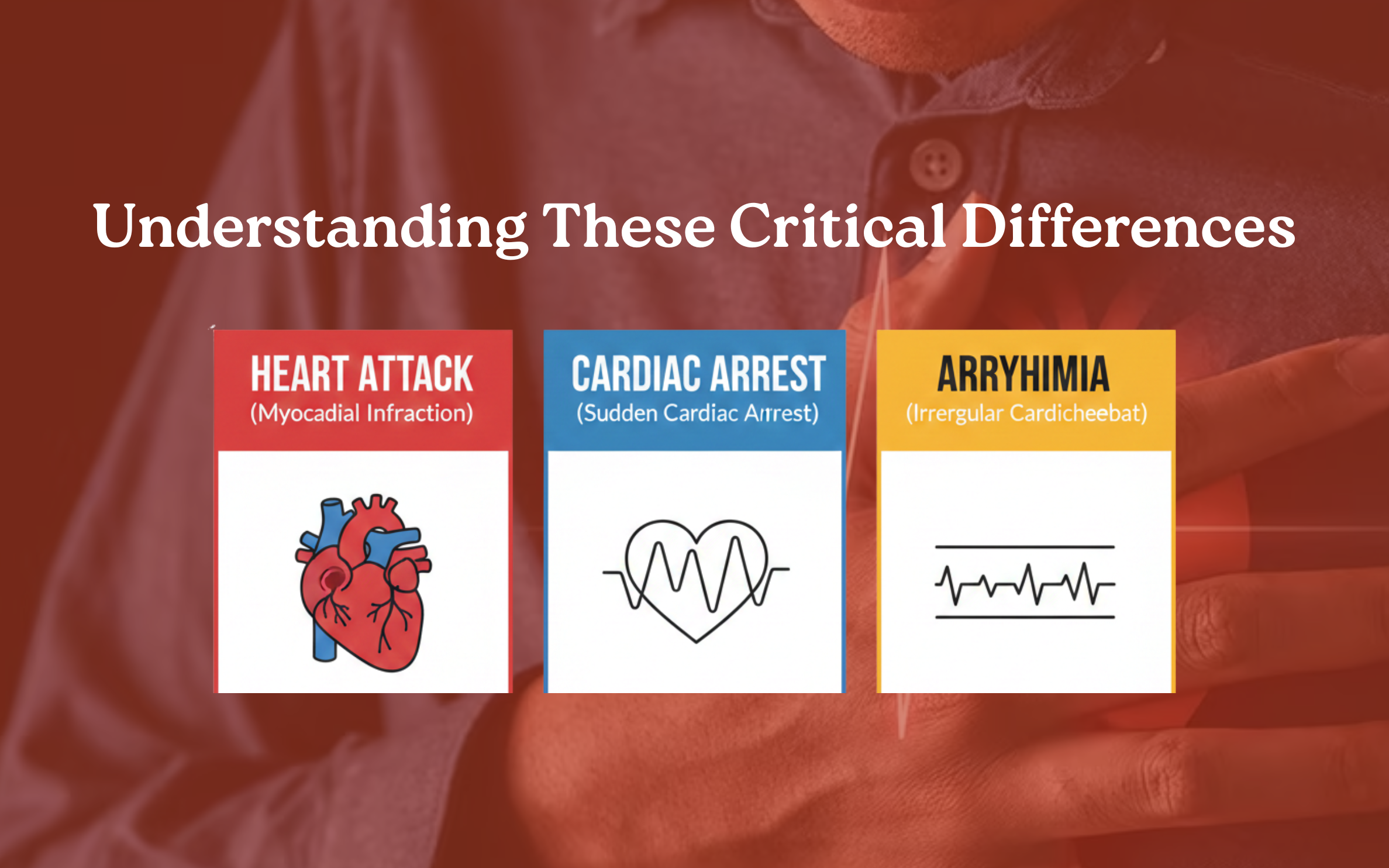
When it comes to heart-related emergencies, terms like heart attack, cardiac arrest, and arrhythmia are often used interchangeably. But in reality, these conditions are very different, and knowing these differences can save a life. Whether you are a patient, caregiver, or simply someone interested in improving your heart health, understanding each condition is essential.
This guide breaks down the causes, symptoms, risks, prevention, and emergency responses associated with these three major heart conditions—especially focusing on cardiac arrest, one of the most critical medical emergencies.
What Is a Heart Attack?
A heart attack (medically known as myocardial infarction) occurs when blood flow to the heart muscle gets blocked, usually due to plaque buildup in the coronary arteries. This blockage prevents oxygen-rich blood from reaching the heart, causing the heart muscle to weaken or die if not treated in time.
Common Heart Attack Symptoms
- Chest pain or pressure (“heavy weight on the chest”)
- Pain radiating to arm, jaw, back, or shoulder
- Shortness of breath
- Cold sweats
- Nausea or vomiting
- Fatigue or dizziness
A heart attack is a circulation problem—blood cannot reach the heart effectively. Most patients remain conscious, and the heart usually continues to beat.
What Causes a Heart Attack?
- Coronary artery disease
- High cholesterol
- Smoking
- Diabetes
- Obesity
- Stress
- Sedentary lifestyle
A heart attack requires urgent medical treatment, but it is not the same as cardiac arrest.
What Is Cardiac Arrest? (The Most Critical Emergency)
A cardiac arrest happens when the heart suddenly stops beating. This means no blood flow to the brain, lungs, or other organs. Within seconds, the person collapses, stops breathing, and becomes unresponsive.
Sudden Cardiac Arrest Symptoms
- Sudden collapse
- No pulse
- No breathing
- Loss of consciousness
Cardiac arrest is an electrical problem, not a circulation problem. The most common cause is a dangerous arrhythmia called ventricular fibrillation, where the heart quivers instead of pumping.
Top Causes of Cardiac Arrest
- Ventricular fibrillation
- Severe arrhythmias
- Heart attack (heart attacks can trigger cardiac arrest)
- Cardiomyopathy
- Heart failure
- Coronary artery disease
- Electrocution or trauma
- Drug overdose
Cardiac Arrest Treatment: Time Is Everything
- CPR (Cardiopulmonary Resuscitation)
- Defibrillation (using an AED)
- Emergency medical support
Every minute without CPR reduces survival by 7–10%. Learning CPR is one of the most powerful skills for saving lives during cardiac arrest.
What Is an Arrhythmia?
An arrhythmia is a heart rhythm disorder—the heart may beat too fast, too slow, or irregularly. Some arrhythmias are harmless, while others can be life-threatening.
Most Common Types of Arrhythmias
- Atrial fibrillation (AFib) – rapid irregular heartbeat
- Ventricular tachycardia (VT) – dangerously fast rhythm
- Ventricular fibrillation (VF) – chaotic rhythm causing cardiac arrest
- Bradycardia – abnormally slow heart rate
- Supraventricular tachycardia (SVT) – fast rhythm from upper chambers
Arrhythmia Symptoms
- Palpitations
- Fluttering in the chest
- Chest discomfort
- Light-headedness
- Fatigue
- Shortness of breath
Arrhythmias can lead to cardiac arrest, especially VT and VF, which require urgent electrophysiology evaluation and treatment.
Heart Attack vs Cardiac Arrest vs Arrhythmia: Key Differences
| Condition | What It Is | Primary Problem | Consciousness | Emergency Level |
|---|---|---|---|---|
| Heart Attack | Blocked blood flow to the heart | Circulation issue | Usually conscious | Emergency but not always instantly fatal |
| Cardiac Arrest | Heart stops beating | Electrical failure | Unconscious | Extremely critical—needs CPR/AED |
| Arrhythmia | Abnormal heart rhythm | Electrical disturbance | Usually conscious | Can range from mild to life-threatening |
How They Are Connected
- A heart attack can trigger a dangerous arrhythmia, leading to cardiac arrest.
- Severe arrhythmias like VT/VF are the most common causes of sudden cardiac arrest.
- Not all arrhythmias cause cardiac arrest, but high-risk rhythms need treatment to prevent it.
Diagnosis of Heart Attack, Cardiac Arrest, and Arrhythmia
Common Diagnostic Tests:
- ECG (Electrocardiogram)
- Echocardiogram
- Cardiac biomarkers (for heart attack)
- Holter monitoring
- Electrophysiology study (EP Study)
- Coronary angiography
- Defibrillator evaluation or ICD for cardiac arrest survivors
Who Is at Risk?
- High blood pressure
- High cholesterol
- Diabetes
- Smoking
- Obesity
- Sedentary lifestyle
- Family history of cardiac arrest or heart disease
- Stress
- Excessive alcohol consumption
- Previously documented arrhythmias
Preventing Heart Attacks, Cardiac Arrest, and Arrhythmias
1. Adopt a Heart-Healthy Lifestyle
- Eat a balanced diet (Mediterranean style)
- Exercise regularly
- Maintain a healthy weight
- Quit smoking
- Limit alcohol
2. Control Underlying Conditions
- Manage diabetes
- Treat high blood pressure
- Reduce cholesterol
- Take medicines exactly as prescribed
3. Routine Heart Checkups
- Annual ECG
- Stress test for high-risk individuals
- EP evaluation if experiencing palpitations
- Coronary screening when required
4. Know Emergency Responses
- Learn CPR
- Know how to use an AED
- Understand early warning signs of cardiac arrest
Quick action saves lives.
When to Seek Medical Help Immediately
- Sudden collapse or no breathing (possible cardiac arrest)
- Persistent chest pain (possible heart attack)
- Severe palpitations
- Shortness of breath
- Blackouts or near-fainting episodes
Never ignore these warning signs.
Conclusion
Heart attack, cardiac arrest, and arrhythmia are often confused, but they are very different conditions.
- A heart attack is caused by blocked blood flow.
- An arrhythmia is a disorder of heart rhythm.
- A cardiac arrest is the sudden stopping of the heart—and requires immediate CPR and defibrillation.
Understanding these differences can help you respond effectively during an emergency, protect your heart health, and potentially save someone’s life. If you experience palpitations, chest pain, dizziness, or fainting, consult a cardiologist or electrophysiologist for evaluation.
